
The Elusive Clockmaker - A Short History of Time
In times past common folk had little interest in time as such, clocks and watches were expensive preserves of the gentry. People were called to prayer by the Church bell and to work by the factory whistle or the ‘knocker upper’. Some might have sight or sound of a church clock, if there was one, or just rose and retired with the rising and setting of the sun or ‘cock crow’. Also, wages tended to be based on the quantity of work done rather than hours worked. Sundials were cheap and gave solar time but this varied from ‘clock time’ depending on their geographical location and the time of year!
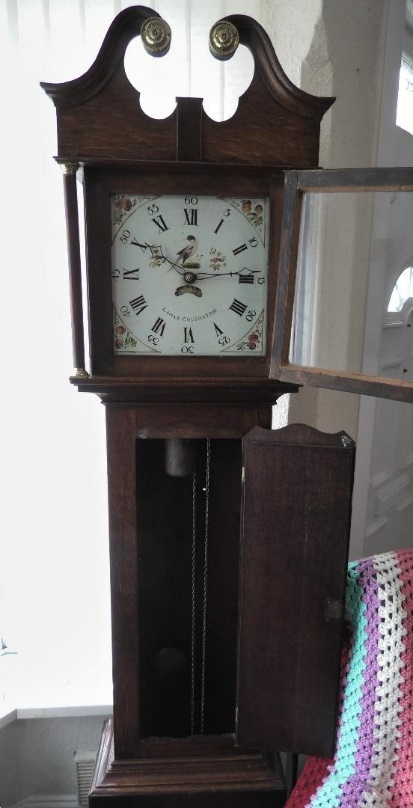
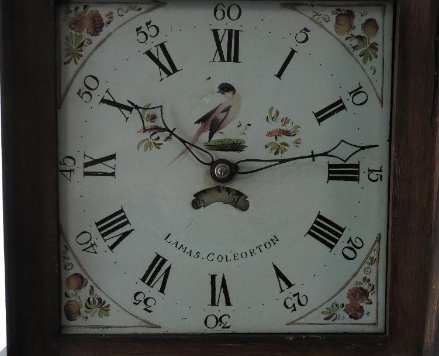 The earliest domestic clocks were introduced in the early 1600, if they could be afforded. These were known as lantern clocks and relied on pairs of weights to drive an hour hand and strike the hour. These clocks only had one hand to indicate the hour, since they might lose or gain 15-20 minutes a day making the accuracy implied by a minute hand pointless. Around 1680 long case clocks were developed to house the combination of the newly invented anchor escapement with a long pendulum which allowed much greater accuracy and eight day movements rather than just 30 hours as before. As the price of these clocks fell, they became increasingly affordable by ordinary people and by the 18th and 19th Century all towns and many villages would have had their own clockmaker. This begs the question, did Coleorton have a village clockmaker? A search of the census returns from 1841 and earlier records fails to locate any Coleorton clockmakers. Consequently, the Coleorton Heritage Group was surprised when an enquirer sent us an image of a long case clock with the name ‘Lamas, Coleorton’ painted on the dial (see Images).
 Embarrassingly, neither we nor Leicester Museum were able to find any more information about this clockmaker in answer to the enquirer. A consultation of John Daniell’s Book listing 220 pre-1900 Leicestershire clock and watchmakers similarly came up blank, although it does list Thomas Amas from Coleorton as a member of the ‘Society of Leicestershire Watch and Clockmakers’ in 1795, but no surviving clocks by this maker are known.
Throughout this item, you may have noticed I have used the term long case clocks, the usual term ‘grandfather clock’ only came into use after 1876 following Henry Clay Work’s popular song ‘My Grandfather’s Clock’, but by that time the age of the craftsman clockmaker had passed and if he still existed at all it was merely as a clock repairer and retailer of mass produced, factory made, clocks.
Grandfather clocks (I will now use this term) can often be dated quite precisely by various features on the clock face, in the case of our enquirer’s clock it can be fairly confidently dated to between 1770 and 1800. The Coleorton Heritage Group would be interested to hear of any further information on Coleorton clockmakers or their clocks possessed by our readers.
Terry Ward
Coleorton Heritage Group
August 2026